

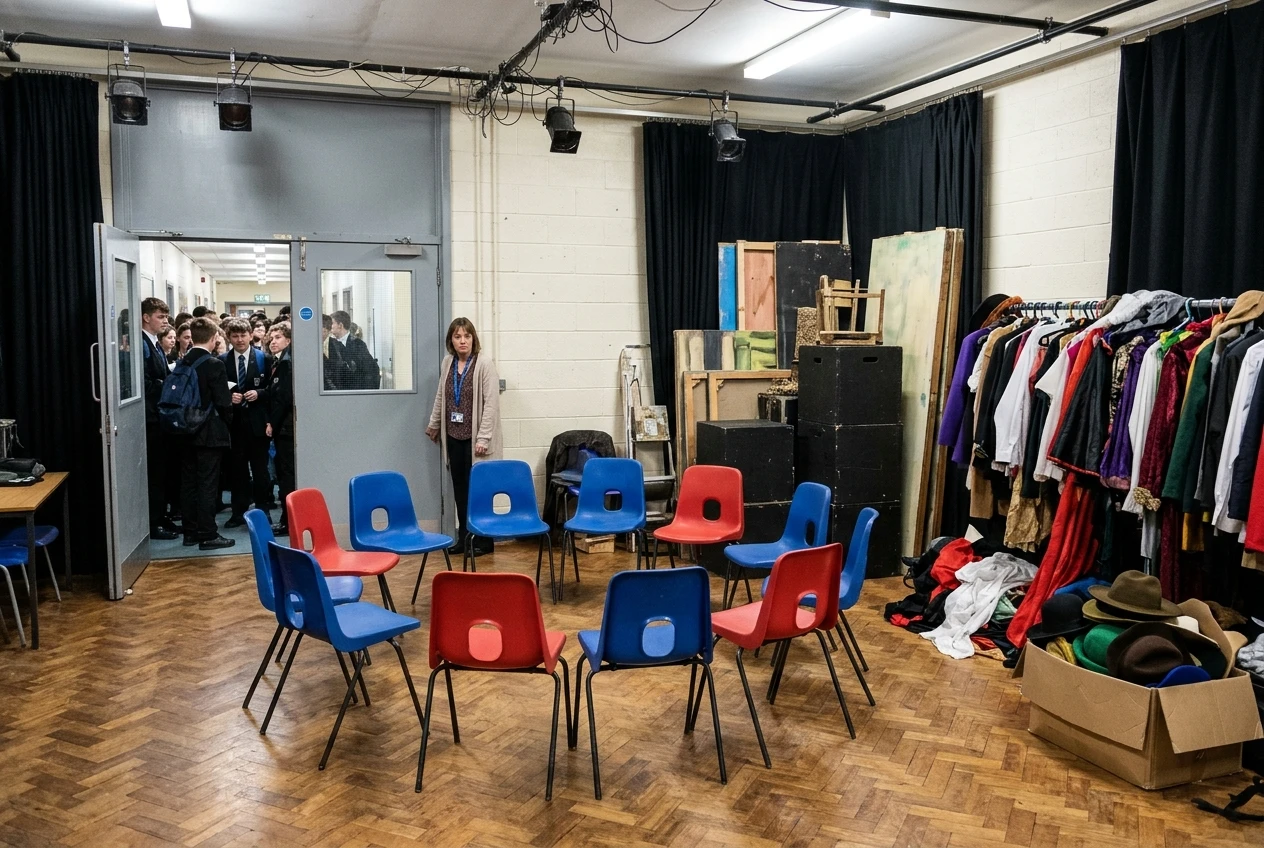
You’ve got five minutes before Year 9 arrive. Year 7’s chairs are still in a semicircle, half the set from Tuesday’s rehearsal is leaning against the wall, and there’s a box of felt hats nobody will admit to owning. Somewhere on the school hard drive is the scheme of work you wrote in September. You’d quite like to find it before the class comes in. And it’s not because you don’t prepare because there’s always a situation when something unexpected crops up the night before and you start the day on the back foot. We’ve all been there!
It’s often the little things that eat into your time in drama. Finding the right file, putting the room back together, tracking down a script or writing the same rehearsal reminder again. And all of that can happen before you’ve taught a lesson.
Here are six drama teacher organisation tips to make those jobs easier. Start with whichever one would make the biggest difference to your week.
Good luck!
Drama teacher organisation tips that work:
1. Give every scheme of work a home
You know you’ve got a better version of that lesson somewhere. The trouble is, you’ve also got a copy in an email attachment, one on the department drive and another called Devising FINAL revised.
Give each scheme of work one home on your school-approved drive. I’d start with a folder for each year group, then a folder for each unit. Inside each unit, use the same four folders:
- Planning for the scheme of work and lesson outlines
- Slides, resources and handouts for things you’ll use in the lesson
- Stimulus and scripts for extracts, images and other starting points
- Assessment for criteria and feedback templates, with pupil work stored wherever your school requires
A name such as Year 9 – Devising – Lesson 3 – Using Status gives you something specific to search for while the class is waiting.
Drama Teacher tip. Make one empty unit folder with those four folders inside it. Copy it whenever you start a new unit. If you’ve only got ten minutes this week, make the template and move across the materials for the lesson you’ll teach next.
2. Spend the last three minutes of each lesson resetting the room
If you teach in a shared hall or studio, agree with the other staff how it should be left. Once you’ve got the room in that state, take a photo and put it somewhere pupils can see it. I used to teach drama in a geography room every week and we had to move all the desks and chairs to one side at the start of the lesson and move them all back at the end.
Stop the practical work a few minutes before the bell and give the class the same jobs each time:
- Return chairs and blocks to their agreed places
- Put any scripts, props and costumes back where they belong
- Check the space against the photo, including the floor and doorways
You can rotate a stage manager role so a different pupil leads the final check each week. Make sure everyone has a job they can do. One pupil might collect scripts while another checks the props box or calls out what’s still missing. You can still do the final check before the class leaves.
Drama Teacher tip. Teach the reset routine as part of the lesson. Show pupils the photo and tell them they’ll have three minutes at the end. It’s much easier to stick to that if you’ve already told them how the lesson will finish.
3. Number the scripts and label the props
If you’ve ever picked up a script and found that page seven has gone missing again, try numbering each copy on the front. You can then give each pupil or group the same numbered script each time. If scripts go home, a simple loan sheet tells you who has which copy and when it’s due back.
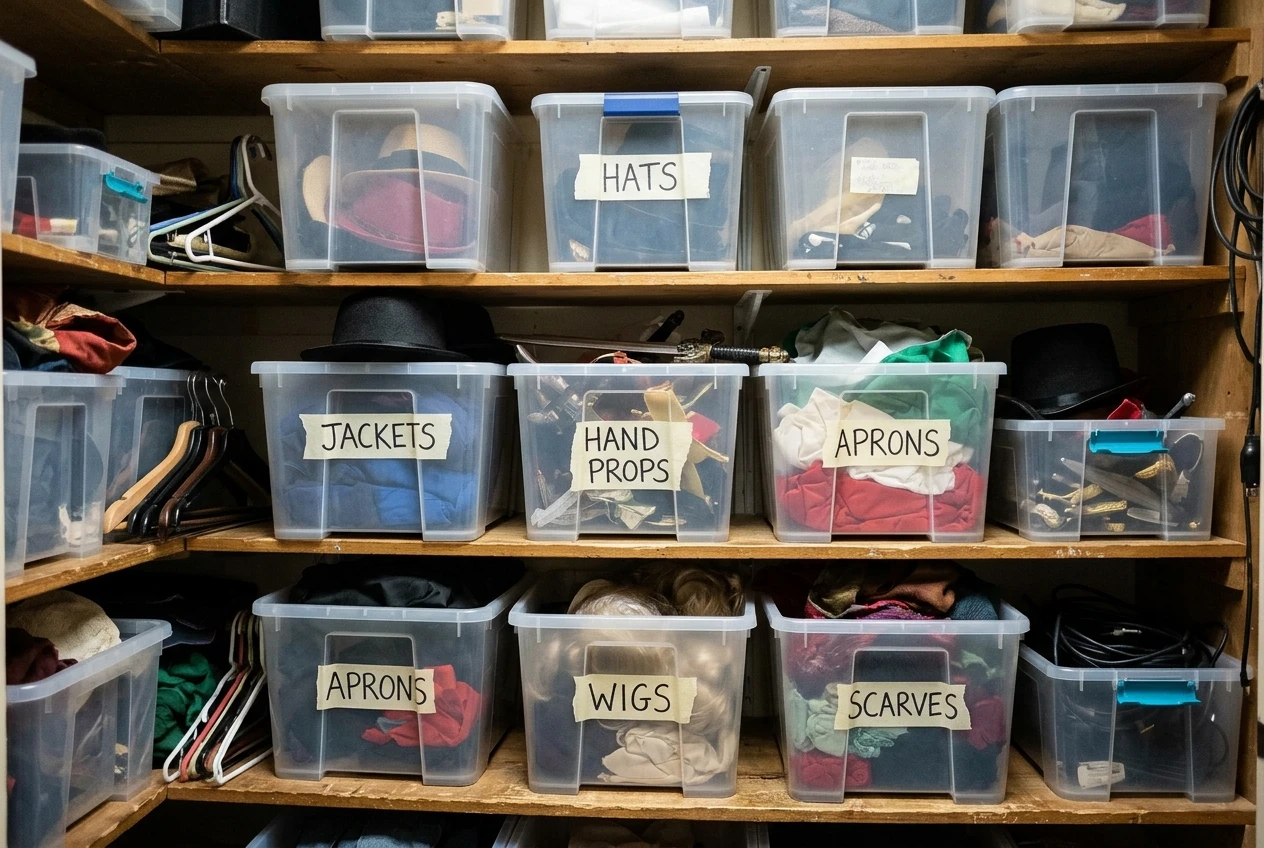
For props and costumes, keep the system simple enough to use on the last Friday of term:
- Label the end and lid of each box so you can read it on the shelf or when the box is open
- Store costumes by character or production, with a short list of what belongs in each bag
- Mark out the props table with labelled spaces so you can spot a missing item at a glance
- Give borrowed items a return date, especially when a colleague or pupil has lent them to the production
Drama Teacher tip. Start with the box you’re always rummaging through. Put a contents list inside the lid and give it a label you can read from where you stand. Clear plastic boxes are ideal because you can also see what is inside them, but they are more expensive than cardboard ones. If you are staring at lots of boxes, just start with one and do that; remember that one sorted box today will save you time at the next rehearsal.
4. Batch the rehearsal admin
A parent asks what time rehearsal finishes, someone needs a costume reminder, and you’re trying to remember where you saved last year’s letter. Before you know it, you’ve opened your laptop three times in one evening.
Try putting aside twenty minutes once a week for routine production admin. Start with the rehearsal schedule. If pupils, parents and staff can find the current version in one agreed place, you’ve got something to point people to when they ask. Put the date of the latest update at the top, especially if you’ve moved a rehearsal or changed the finish time. A notice board that is dedicated to production news is a great idea, and you can keep it updated with the rehearsal schedule, audition times and the cast list. It’s best to have this in a corridor space rather than inside your drama studio. That way, students can find it without disturbing your lessons.
Another useful tip is to see if you can have some space on your school’s intranet or website so that parents/carers and pupils can access it easily. It doesn’t take long to set up, but it will save you lots of questions later.
Keep a few admin templates somewhere you can easily find them:
- Rehearsal reminders with the date, venue, start and finish times, who’s called and what to bring
- Parent or carer updates with collection arrangements and costume information
- Trip, performance or photography consent forms using the relevant school template for each purpose
Anything urgent still gets dealt with as it comes up. The weekly slot is for the routine jobs that otherwise spread across the week.
Drama Teacher tip. Keep one production checklist where you can see who’s returned a form, who still needs a costume and who’s flagged a rehearsal clash. When you sit down to send reminders, the information is already there. Some school management systems integrate this automatically so it is easier to see who’s left to chase. But if not, you need to keep on top of it.
5. Decide what you’re assessing before they perform
Practical work happens quickly. A group finishes, the next one is ready to go, and you’re still trying to remember who made that really effective choice with the chair.
For a short classroom performance, pick one or two things to look for. If the lesson is about status, for example, look for the moment the balance of power changes and what the performers did to show it. Jot down one specific piece of evidence while it’s fresh. “You stayed seated and made them cross the room to you” gives a pupil something they can recognise and build on.
If you need to record a performance, check your school’s arrangements for filming and storing pupils’ work, and follow the relevant exam board instructions for assessed work. Where recording is appropriate, use a consistent camera position and file names that identify the class, piece and group. That saves you opening six clips to find the right one.
Drama Teacher tip. Before the first group starts, remind the class what you’re looking for. One thing that worked well for me was to give one group the job of feeding back to another. Tell them in advance what to watch for, then ask one pupil to share one thing the group did well and one thing they could improve. It sharpens their observation skills and buys you a little more time to finish writing your own notes.
6. Give yourself a finishing point
There’s always another rehearsal email you could answer or another prop you could look for. Choose one evening when you can finish at a sensible time and give yourself ten minutes before you leave to make tomorrow easier.
Check what’s first in the diary, put the resources you’ll need together and write down the first thing you’ll do when you get in. “Print Year 9’s scripts” is much easier to come back to than “Sort Year 9.”
Drama Teacher tip. Choose an evening that fits around your rehearsals. If the same one works most weeks, it’s easier to plan around your teaching and your personal life around it.
Start with the job you do over and over
If you’re forever looking for scripts, number the set you’re using now. If the room reset is eating into every lesson, take the photo and try the three-minute routine with one class. Give it a week and see whether it makes your day any easier.
And if you’ve got any drama teacher organisation tips that’s saved you time in the drama room, I’d love to hear it. Especially if you know what to do with that box of felt hats!
Enjoy!
Related posts
An introduction to devising drama